Posts

Technology and the Western Story
Image
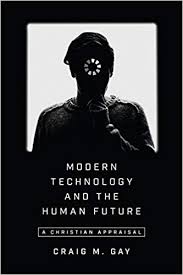
In his Modern Technology and the Human Future , Craig Gay asks why we have been so accepting of automatic machinery, and why we are not more concerned that modern technological development is trending away from ordinary embodied human existence. How has technology become the metaphysics of the modern age (95)? Gay argues that our uncritical embrace of technology as the means to progress and the good life is the result of a particular way in which we see nature, or the world. Metaphors matter. And in chapter 3, Gay traces the development of a metaphor that has become the way in which humans now conceptualize the world they live in. The metaphor is a machine. We have conceived of the world as a collection of interconnected parts and elements that function in a mechanical fashion. This metaphor has had a radical impact on the way we understand our place in the world, our calling or vocation we might say. If all of life is more or less made of a vast collection of parts and elements ...

The Angst of the Modern Self

In concluding Part 1 of his book, God Freedom, and Human Dignity, Highfield observes that "If we learned about the human condition only from the high-flying rhetoric of the modern self, we would imagine humanity a race of gods. Given only the descriptions of Mirandola, Descartes and Rousseau, beings from another galaxy might imagine human beings as winged creatures in graceful flight, their noble faces shining with cool pride as they survey their broad domain. Their freedom knows no limit, their dignity exceeds all bounds and their power dwarfs all competitors. Ah, but we know the human condition too well for such illusions!...Anxiety, weakness, suffering, sadness, futility and despair mark its path from start to finish" (102). There is an enormous disparity between the inflated self-understanding of the modern self and the reality of the world we have made for ourselves in the modern age, especially with all the technological capabilities at our disposal. I have worked ...

The Context of Christian Vocation: Some assumptions of the modern era

Image
"Do not be conformed to this world,   but be transformed by the renewing of your minds, so that you may discern what is the will of God—what is good and acceptable and perfect."  --Romans 12.2 There are two fundamental assumptions that the Apostle Paul makes in this pivotal passage in Romans. First, he asserts that there is a "Caller", one who has summoned us, commissioned us; one who has a plan or will for us. Embedded in this assumption is responsibility: we are obligated to discern the will of the "Caller", to conform our lives to something outside of ourselves. Though Paul doesn't use the term, he is underscoring that we have a vocation, that is, a responsibility to discern the Voice that calls us (the word vocation comes from the Latin word vocare , which means 'to call') to live in this world in a particular way. The second assumption of this passage is that our vocation is lived out in a context in which we are being directed...

What does it look like "to be conformed to the image of the Son"? (Romans 8.29 meets Jesus' High Priestly Prayer)

Image
According to the apostle Paul, God is committed to conforming us to the image of His Son (Rom 8.29). Paul does not explicitly develop what he means by this in the rest of his letter, though one could argue that he has Romans 12-16 in mind. And so it raises a question in my mind: what does it look like to be conformed to the image of the Son? I suppose there are a number of ways to explore this question, but I have been challenged by drawing this claim by Paul into conversation with Jesus in his 'high priestly prayer" in John 17. The prayer is astonishingly revealing because it tells us what Jesus was doing before creation: He was delighting in the Father's love. In fact, he states that His glory is the fact that he has been loved before the foundation of the world (John 17.24). What is more, we learn from this prayer in John 17 that Jesus came into the world so that the love with which he has been loved by the Father might be in us (John 17.26). According to Jesus, t...

What's a metaphor?

Image
I am working on a monograph that wrestles with the way in which the identity, prerogatives, mission, and privileges of Israel are applied to the addressees of the letter of 1 Peter, whom most scholars agree are predominantly if not exclusively Gentile in makeup. One of the most common ways that scholars make sense of the way in which Israelite identity is being appropriated by Gentiles in 1 Peter,  is to speak of Israel as a metaphor. In other words, in the letter of 1 Peter, they say, "Israel" is being used as a metaphor (or the controlling metaphor) for the church and its mission in society. Some argue that using Israel as a metaphor is problematic, even imperialistic, while others seem rather indifferent to the enterprise and consider it to be benign in nature. I am not going to weigh in on this at this time, but this common move to refer to what is happening in 1 Peter as metaphor, coupled with the wide range of reactions that scholars have regarding the usage of metapho...

"Show Your Work" and Biblical Scholarship

Image
 In the rhythm of the academic year, summer is often a time for me to reflect upon the craft of scholarship and/or teaching. I recently discovered a book called  Show Your Work:10 Ways to Share Your Creativity and Get Discovered by Austin Kleon (thanks, Luke Tallon). While it is written for artists and writers, it wasn't hard to make connections with the craft of scholarship. Here are a few takeaways from the book, which I have translated into my world of biblical and theological scholarship: 1. Creativity is not the product of a lone genius. Great ideas, profound insights, compelling questions,  unexpected connections come from engagement with others (and not just in books). Good scholarship comes from social interaction. Kleon encourages us to make the most of collaboration, especially with the capabilities of the Internet. I would add to his observation that it is helpful to pay attention to the contributions and questions of non-scholars, things that people in the...

An Introduction to Understanding Christian Vocation

Image
This is a rough draft of my introduction to a new graduate course we are designing at LETU, "Understanding Christian Vocation". This course is about vocation , a word that is unfamiliar to some, and often misunderstood because it has a variety of meanings that are tangentially related. For example, sometimes we use the word as a synonym for occupation or profession. If someone were to ask you what your vocation was, you might reply “I am a doctor”, or “I am a lawyer”, or, or “I’m a high school English teacher”, or “I am a soccer coach”. At other times the word can be turned into an adjective and attached to other words: vocational training, for example, refers to an educational program that focuses on acquiring the specific skills necessary for employment in a particular craft or trade such as an auto mechanic, a hair stylist, a plumber, a dental hygienist, or an electrician. Traditionally, the point of calling this kind of schooling vocational training often was to...